





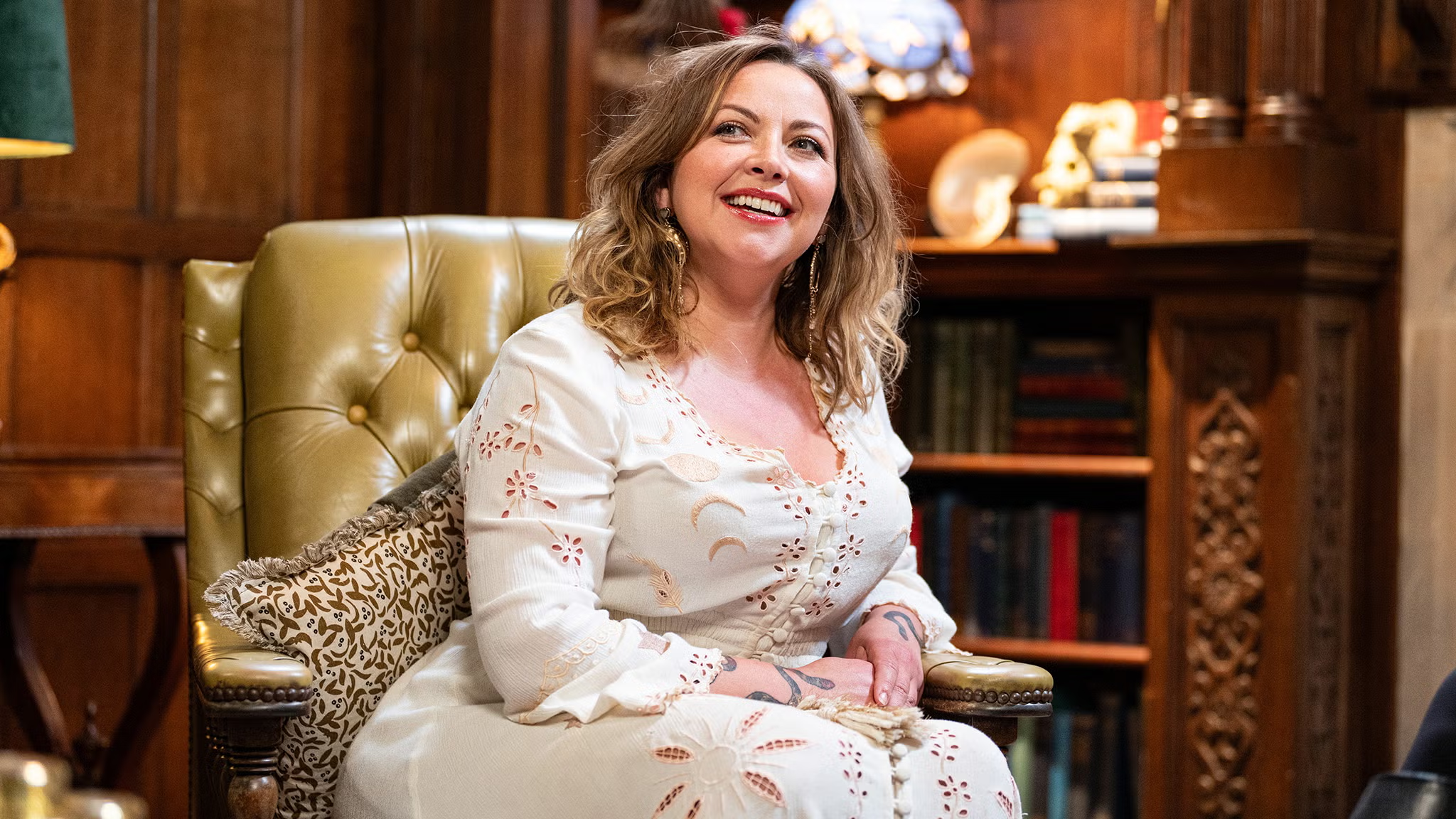
Introduction to charlotte traitors
Reality television has a unique way of turning everyday people into widely discussed personalities, and The Traitors is one of the best modern examples of that phenomenon. Among the contestants who sparked conversation, debate, and intrigue, Charlotte emerged as a figure viewers couldn’t stop talking about. Whether audiences admired her instincts, questioned her decisions, or analyzed her gameplay from multiple angles, Charlotte’s presence on The Traitors left charlotte traitors a noticeable impression.
This article takes a deep dive into Charlotte’s journey on The Traitors, exploring her gameplay style, social strategy, psychological approach, and how viewers interpreted her role in the larger narrative of the show. Rather than focusing on surface-level moments, we’ll unpack what made Charlotte such a compelling part of the experience and why her time on The Traitors continues to resonate with fans of strategic reality TV.
Understanding The Traitors and Why Contestants Like Charlotte Matte
The Traitors is not a typical reality competition. Unlike shows charlotte traitors that focus purely on physical challenges or talent-based performances, The Traitors thrives on psychology, deception, trust, and social dynamics. Contestants charlotte traitors are divided into Faithfuls and Traitors, and the entire game revolves around identifying who is lying and who is telling the truth.
In this environment, personality matters just as much as strategy. Charlotte entered a game where perception could be more powerful than logic, and where emotional intelligence often determined survival. Her role on the show became interesting precisely because she reflected the struggles many players face: balancing honesty with suspicion, confidence charlotte traitorswith caution, and intuition with evidence.
Charlotte mattered because she embodied the human side of the game. She wasn’t just a chess piece moving across the board; she was a participant navigating fear, doubt, trust, and pressure in real time.
Charlotte’s First Impressions and Early Game Presence
First impressions in The Traitors can set the tone for an entire season. From the beginning, Charlotte came across as observant and thoughtful, someone who didn’t rush to dominate conversations but also didn’t fade into the background. This balance made her an intriguing presence early on.
Rather than immediately adopting a loud or confrontational charlotte traitors approach, Charlotte appeared to prioritize understanding group dynamics. She listened closely to others, absorbed information, and seemed cautious about revealing too much of her own thinking. In a game where overexposure can make someone a target, this was a sensible early strategy.
At the same time, subtle behavior can sometimes be misread. In The Traitors, silence can be interpreted as intelligence—or guilt. Charlotte’s reserved nature occasionally placed her under scrutiny, showing how difficult it is to control perception in such a psychologically intense environment.
Social Strategy: Navigating Trust and Suspicion
One of the most fascinating aspects of Charlotte’s journey on The Traitors was how she navigated social trust. The game demands constant evaluation of alliances, even though formal alliances are often unspoken. Every conversation, glance, and reaction can be interpreted as evidence.
Charlotte appeared to rely heavily on interpersonal cues charlotte traitors rather than dramatic accusations. She engaged in conversations that allowed others to reveal their thinking, which gave her insight without forcing her to expose her own position. This approach can be powerful, but it also carries risks when others are more aggressive or persuasive.
Her social game highlighted an important reality of The Traitors: being right isn’t always enough. You also have to convince others you’re right, and that requires confidence, timing, and influence. Charlotte’s experience showed how difficult it can be to balance accuracy with assertiveness.
Psychological Pressure and Decision-Making Under Stress
The psychological pressure in The Traitors is relentless charlotte traitors , and Charlotte’s reactions to that pressure made her journey especially relatable. Contestants are isolated, deprived of complete information, and constantly forced to question their instincts. Over time, this environment can amplify self-doubt and emotional fatigue.
Charlotte often appeared deeply reflective,charlotte traitors carefully weighing decisions rather than acting impulsively. While this thoughtful approach suggested intelligence and emotional awareness, it also made moments of uncertainty more visible. Viewers could see her wrestling with doubt, especially when group consensus conflicted with her instincts.
This internal struggle is a core element of The Traitors, and Charlotte’s openness to questioning herself made her feel authentic. Instead of presenting a perfectly confident front, she reflected the psychological cost of the game, reminding viewers that strategy doesn’t exist in a vacuum.
Roundtable Dynamics and the Power of Groupthink
The roundtable is where The Traitors reaches charlotte traitors its dramatic peak, and Charlotte’s experiences there reveal much about group psychology. At the roundtable, logic often competes with emotion, and louder voices can sway outcomes regardless of evidence.
Charlotte sometimes found herself in situations where her perspective differed from the dominant narrative. This is one of the hardest positions to occupy in the game. Speaking up can paint a target on your back, while staying quiet can be interpreted as avoidance.
Her participation in these discussions illustrated the difficulty of resisting groupthink. Even when contestants sense something is wrong, the pressure to conform can be overwhelming. Charlotte’s moments of hesitation and selective engagement reflected the strategic calculation many players face: when to speak, when to wait, and when silence might be safer.
Viewer Perception and Public Reaction
Audience reaction to Charlotte on The charlotte traitors Traitors was mixed, thoughtful, and often passionate. Some viewers admired her measured approach and emotional intelligence, seeing her as a grounded presence in a chaotic game. Others felt frustrated by moments where she didn’t push harder or assert her beliefs more forcefully.
This range of opinions is part of what made Charlotte such a compelling figure. She wasn’t a one-dimensional character, and she didn’t fit neatly into the archetype of a fearless strategist or dramatic instigator. Instead, she represented a more realistic approach to the game—one shaped by caution, reflection, and human vulnerability.
Social media discussions frequently highlighted her authenticity. Whether viewers agreed with her decisions or not, many recognized that her reactions felt genuine rather than performative, which is increasingly valued in reality television.
Comparing Charlotte to Other Traitors Contestants
When comparing Charlotte to other charlotte traitors contestants on The Traitors, her gameplay stood out for its subtlety. While some players relied on dominance, charisma, or aggressive tactics, Charlotte leaned toward observation and internal analysis.
This comparison underscores an important truth about the game: there is no single winning strategy. The success of a contestant depends on timing, casting dynamics, and how individual styles interact. Charlotte’s approach may not have been the loudest, but it highlighted an alternative way to navigate deception-based competition.
Her journey also showed that quieter players can still leave a lasting impact. In a game filled with dramatic confrontations, Charlotte’s thoughtful demeanor provided contrast and depth.
Lessons from Charlotte’s Time on The Traitors
Charlotte’s experience on The Traitors charlotte traitors offers valuable lessons for both future contestants and viewers interested in human behavior. One key takeaway is that self-awareness is crucial but must be balanced with assertiveness. Knowing what you think is only part of the challenge; communicating it effectively is equally important.
Another lesson is the importance of emotional resilience. The game tests patience, confidence, and trust, and even strong strategies can falter under sustained pressure. Charlotte’s moments of doubt and reflection highlighted how emotionally demanding the experience can be.
Finally, her journey emphasizes that authenticity has value. While some reality TV contestants prioritize theatrics, Charlotte showed that being genuine can resonate just as strongly, even if it doesn’t always translate into immediate success within the game.
The Broader Impact of Charlotte’s Role on the Show
Beyond individual gameplay, Charlotte charlotte traitors contributed to the overall tone and complexity of The Traitors. Her presence reinforced the idea that the show isn’t just about deception—it’s about how people respond to uncertainty and moral tension.
By approaching the game with thoughtfulness rather than manipulation alone, Charlotte helped highlight the ethical gray areas at the heart of The Traitors. Trust, after all, is not just a strategic tool but a deeply human instinct, and watching it tested is part of what makes the show so compelling.
Her role also demonstrated how diverse personality types enrich reality television. Without contestants like Charlotte, the show would risk becoming one-note or overly aggressive.
Why Charlotte Remains Memorable
Charlotte’s lasting impression on The charlotte traitors Traitors comes from her relatability. Many viewers saw aspects of themselves in her decision-making process: the hesitation before speaking up, the internal debate between instinct and evidence, and the emotional toll of constant suspicion.
She wasn’t presented as a flawless strategist or a villainous mastermind, and that honesty made her journey feel real. In a genre often criticized for exaggeration, Charlotte’s authenticity stood out.
Her time on the show continues to spark discussion because it invites viewers to ask themselves how they would behave under similar circumstances—and that’s the mark of a truly engaging reality TV participant.
conclusion
Charlotte’s journey on The Traitors is a reminder that reality television can be more than just entertainment. It can serve as a mirror reflecting charlotte traitors human behavior under pressure, and Charlotte’s experience captured that beautifully.
Through careful observation, emotional intelligence, and moments of vulnerability, she contributed meaningfully to the show’s narrative. Whether viewers agreed with her choices or not, her presence added depth, nuance, and authenticity to the game.
In the end, Charlotte didn’t just play The Traitors—she helped define what makes the show so compelling. Her journey remains a valuable case study in strategy, psychology, and the unpredictable nature of trust.