





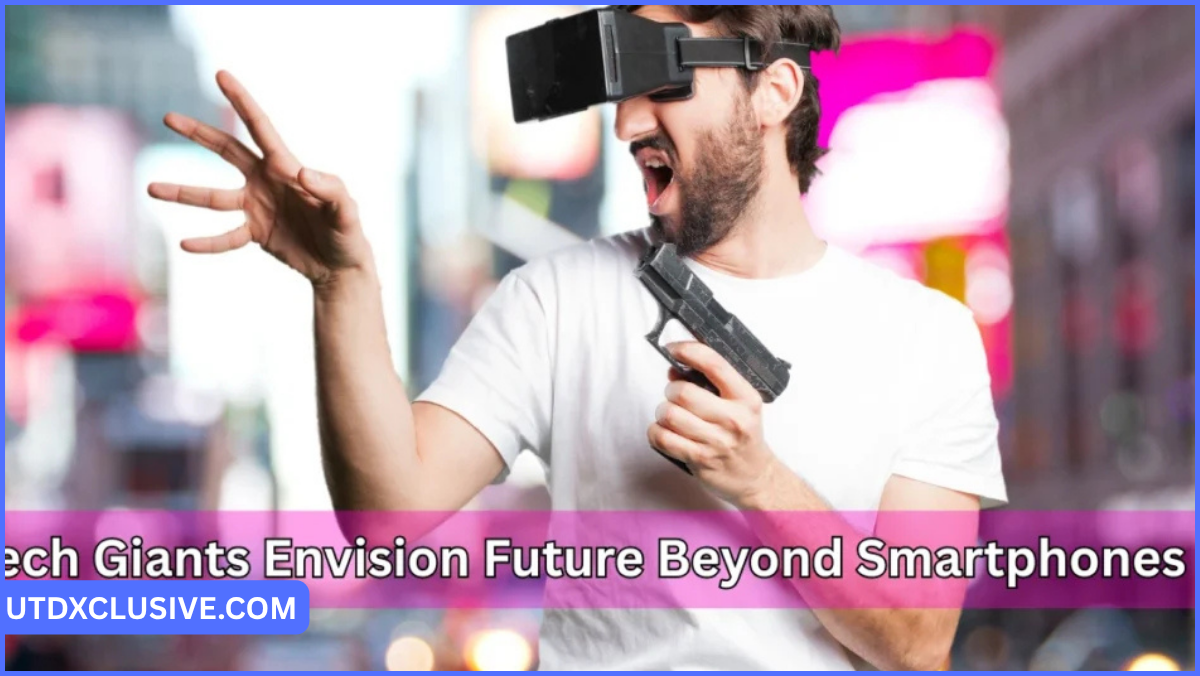
For more than a decade, smartphones have been the center of our digital lives. They have transformed how we communicate, work, shop, learn, and entertain ourselves. From social media and online banking to navigation and remote collaboration, smartphones have become indispensable tools that billions of people rely on every day. However, despite their dominance, many of the world’s largest technology companies are already looking beyond them.
The phrase “tech giants envision future beyond smartphones“ is becoming increasingly relevant as companies like Apple, Google, Meta, Microsoft, and Samsung invest heavily in emerging technologies. These industry leaders recognize that innovation never stands still, and the next major computing platform may soon replace or significantly reduce our dependence on smartphones. From augmented reality glasses and artificial intelligence assistants to wearable devices and spatial computing, the future is shaping up to be more immersive, intelligent, and interconnected than ever before.
Why Tech Companies Are Looking Beyond Smartphones
The smartphone market has reached a level of maturity that leaves limited room for revolutionary advancements. While manufacturers continue to improve camera quality, battery performance, and processing power, most new devices offer incremental upgrades rather than groundbreaking innovations. As a result, many consumers are holding onto their phones longer, creating a slower replacement cycle.
Technology companies understand that future growth depends on creating entirely new categories of products. Instead of simply making smartphones better, they are searching for technologies that can redefine how humans interact with digital information. This pursuit of the next major platform has become a strategic priority across the industry.
Another factor driving this shift is user behavior. People increasingly seek seamless experiences that integrate technology into their daily routines without requiring constant screen interaction. The vision is to create devices that provide information and assistance naturally, reducing the need to pull out a smartphone for every task.
The Rise of Augmented Reality and Smart Glasses
One of the most promising developments in the post-smartphone era is augmented reality (AR). Unlike virtual reality, which immerses users in a fully digital environment, AR overlays digital content onto the real world. This technology has the potential to transform how people access information and interact with their surroundings.
Major tech companies are investing billions of dollars into smart glasses and AR platforms. Apple’s Vision Pro has demonstrated how spatial computing can blend digital experiences with physical environments. Meanwhile, Meta continues to develop AR glasses that could eventually replace many smartphone functions, including navigation, communication, and content consumption.
Smart glasses could allow users to receive directions directly in their field of vision, answer messages through voice commands, and access real-time information without looking at a screen. If the technology becomes affordable, lightweight, and socially acceptable, it could become the next major computing platform.
Artificial Intelligence as the New Interface
Artificial intelligence is rapidly becoming one of the most important technologies shaping the future beyond smartphones. Instead of relying on apps and touchscreens, future devices may use AI-powered assistants capable of understanding natural language and anticipating user needs.
Companies such as Google, Microsoft, and OpenAI are developing increasingly sophisticated AI systems that can perform complex tasks through simple conversations. These assistants can summarize information, manage schedules, generate content, and provide personalized recommendations with minimal user input.
As AI continues to improve, users may no longer need to navigate through multiple applications to complete everyday tasks. A single intelligent assistant could handle everything from booking travel arrangements to managing smart home devices. This shift could fundamentally change the role smartphones play in our daily lives.
Wearable Technology Is Expanding Rapidly
Wearable devices are another area where tech giants see tremendous potential. Smartwatches, fitness trackers, health monitors, and smart rings have already gained significant popularity among consumers worldwide.
These devices offer convenience by providing quick access to information without requiring users to interact with a smartphone constantly. Many modern wearables can track health metrics, monitor physical activity, process payments, and even respond to messages directly from the wrist.
The future of wearables extends far beyond current capabilities. Researchers are developing devices capable of monitoring blood glucose levels, detecting early signs of illness, and providing advanced health insights in real time. As wearable technology becomes more powerful, it may absorb many functions currently handled by smartphones.
Spatial Computing Could Redefine Digital Experiences
Spatial computing is another concept gaining momentum among technology leaders. This approach combines digital content with physical spaces, allowing users to interact with information in three-dimensional environments rather than through flat screens.
Apple, Meta, and Microsoft have all introduced products and platforms focused on spatial computing. These systems aim to create more natural and immersive ways of working, learning, and collaborating. Instead of staring at a smartphone display, users can interact with virtual objects, digital workspaces, and immersive applications positioned around them.
The potential applications are vast. Professionals could collaborate on virtual projects from different parts of the world, students could explore interactive educational experiences, and consumers could enjoy entertainment in entirely new formats. Spatial computing may eventually become a cornerstone of the next technological era.
Challenges Standing in the Way of a Post-Smartphone Future
Despite the excitement surrounding emerging technologies, replacing smartphones will not be easy. Smartphones have become deeply integrated into modern life, offering convenience, portability, and functionality in a compact package. Any successor technology must provide clear advantages while maintaining ease of use.
Cost remains another significant challenge. Many advanced technologies, particularly AR headsets and spatial computing devices, are currently expensive and inaccessible to the average consumer. Widespread adoption will require substantial reductions in price and improvements in user experience.
Privacy and security concerns also play an important role. Devices that continuously collect environmental data, track user behavior, or process personal information through AI systems must address growing concerns about data protection. Building trust will be essential for future technologies to achieve mainstream acceptance.
What Consumers Can Expect in the Coming Years
While smartphones are unlikely to disappear overnight, the next decade will likely bring significant changes to how people interact with technology. Rather than a sudden replacement, consumers can expect a gradual transition where smartphones work alongside new devices and platforms.
Smart glasses, AI assistants, wearable devices, and spatial computing systems will become increasingly capable and interconnected. These technologies will complement smartphones initially before potentially taking over many of their core functions. The result will be a more seamless and intuitive digital experience.
The vision shared by industry leaders suggests a future where technology becomes less intrusive and more integrated into everyday life. Instead of staring at screens for hours each day, users may interact with intelligent systems through voice, gestures, and contextual awareness. This evolution could represent one of the most significant technological shifts since the introduction of the smartphone itself.
Conclusion
The reality that tech giants envision future beyond smartphones highlights a major transformation underway in the technology industry. As innovation accelerates, companies are investing heavily in augmented reality, artificial intelligence, wearable technology, and spatial computing to create the next generation of digital experiences.
Although smartphones will remain important for years to come, the foundations of a new technological era are already being built. The coming decade may redefine how people access information, communicate, and interact with the digital world. For consumers, businesses, and technology enthusiasts alike, the future beyond smartphones promises to be both exciting and revolutionary.